
Our Story
At Aardwolf Africa Adventure Safaris, we chose the aardwolf as part of our identity for a reason. Like the animal itself, we value curiosity, uniqueness and discovering the lesser-known side of Africa.
Why Use The Name Aardwolf?
The Origin Of The Name Aardwolf
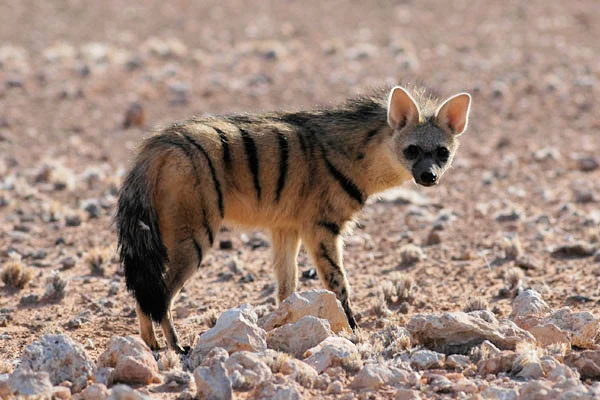
An aardwolf is a small, insect-eating member of the hyena family. Despite looking somewhat like a striped hyena, it has a very different diet and lifestyle. Here are some interesting facts:
- Scientific name: Proteles cristata
- Where it lives: Grasslands and savannas of eastern and southern Africa.
- Size: About 55–80 cm (22–31 inches) long, weighing 8–14 kg (18–31 pounds).
- Diet: Almost entirely termites—especially harvester termites. An aardwolf can eat hundreds of thousands of termites in a single night by licking them up with its long, sticky tongue.
- Behavior: Nocturnal (active at night) and generally solitary or found in pairs.
- Defense: Unlike other hyenas, it has weak jaws because it doesn’t need to crush bones. If threatened, it relies on camouflage, fleeing, or raising the long hairs on its back into a mane to appear larger.
One of the easiest ways to understand an aardwolf is by comparing it to its relatives:
| Aardwolf | Other Hyenas |
|---|---|
| Eats mostly termites | Eat meat, carrion, and bones |
| Small, delicate teeth | Powerful bone-crushing jaws |
| Long sticky tongue | Strong biting ability |
| Timid and solitary | Often more social and dominant predators/scavengers |
Although its name contains “wolf,” an aardwolf is not a wolf and is not closely related to dogs. The name comes from Afrikaans, where “aardwolf” means “earth wolf.” Its unusual termite-based diet makes it one of the most specialized mammals in Africa and an important natural controller of termite populations.
The Aardwolf – Africa’s Little-Known Termite Specialist
The aardwolf is one of Africa’s most fascinating—and often overlooked—wild animals. Although its name means “earth wolf,” the aardwolf is neither a wolf nor a dog. It is actually a unique member of the hyena family, but unlike its larger relatives, it has no interest in hunting large prey or scavenging carcasses.
Instead, the aardwolf has developed a remarkable specialty: termites.
Found across parts of eastern and southern Africa, aardwolves are mostly active after sunset. Under the cover of darkness, they leave their dens and quietly move across open grasslands in search of termite colonies. Using their long, sticky tongues, they can consume enormous numbers of termites in one night.
Unlike spotted and striped hyenas, aardwolves have relatively small teeth and much weaker jaws. They simply don’t need powerful bone-crushing teeth because their diet consists almost entirely of insects.
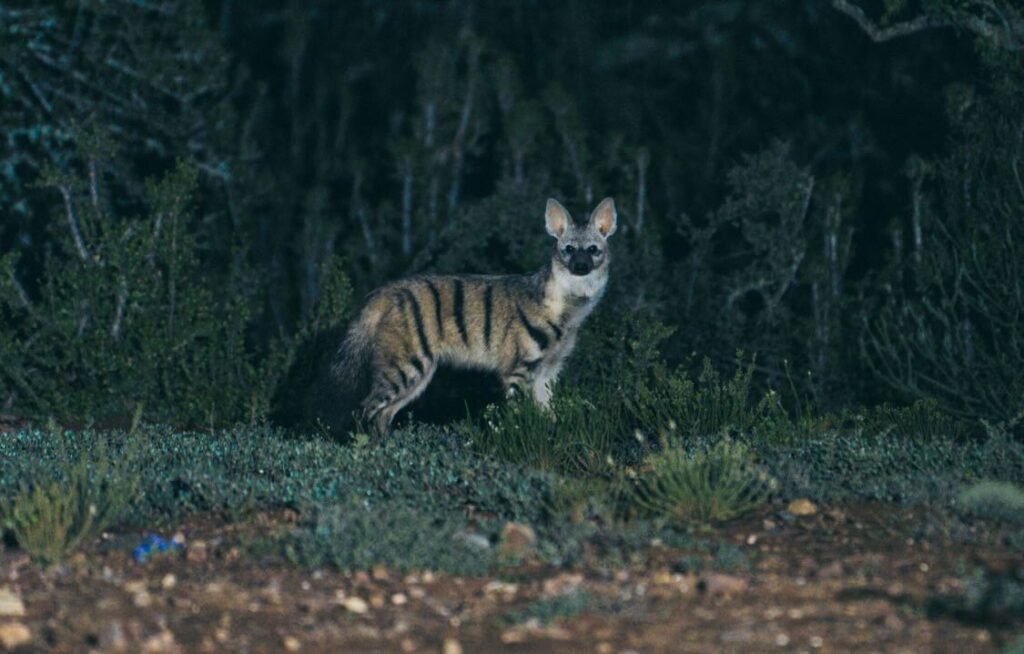
A Master of Survival
The aardwolf’s quiet lifestyle is part of what makes it so intriguing. It is generally shy and elusive, spending much of the day resting in underground burrows and emerging at night to feed.
When alarmed, an aardwolf can raise the long hairs along its back and tail, making itself appear considerably larger. This striking mane is one of its most recognizable features.
Why the Aardwolf Matters
Every animal has a role to play in Africa’s ecosystem, and the aardwolf is no exception. By feeding heavily on termites, it helps regulate termite populations within the grassland environment.
Yet despite being relatively widespread in some areas, aardwolves are rarely seen by safari visitors. Spotting one on a night drive can therefore be a particularly special wildlife encounter.
The Aardwolf & Aardwolf Africa Adventure Safaris
At Aardwolf Africa Adventure Safaris, we chose the aardwolf as part of our identity for a reason. Like the animal itself, we value curiosity, uniqueness and discovering the lesser-known side of Africa. A safari is not only about seeing the Big Five. It is also about noticing the smaller stories—the unusual animals, the nocturnal creatures, the tracks in the sand and the unexpected encounters that make every African journey different.
Come with us and discover the Africa beyond the obvious.
Sometimes, the most memorable safari encounters are the ones you never expected.